
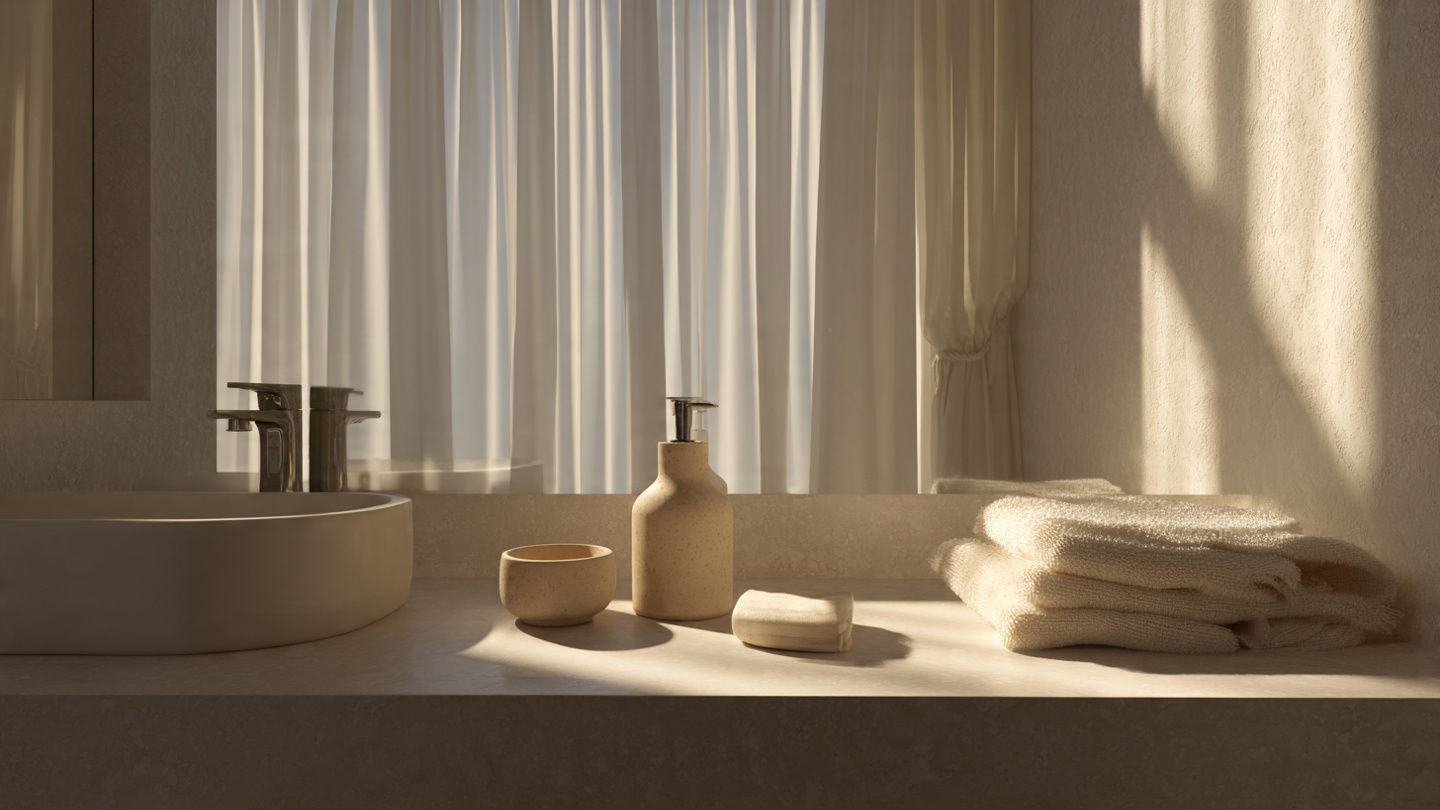

The bathroom is often the smallest room in the home, yet it carries the weight of many daily rituals. It’s where mornings begin and nights unwind. In rentals and older homes especially, bathrooms can feel purely functional—bright lights, hard surfaces, little warmth.
A spa-like bathroom doesn’t require renovation or permanence. It’s about atmosphere. Softness. Rhythm. The feeling that the space is working with you instead of rushing you through.

When the bathroom begins to feel calm, everyday routines slow down naturally. Even a quick shower can feel like a pause. Even brushing your teeth can feel grounded.
Creating that shift is more about intention than transformation.
What “Spa-Like” Really Means
A spa is not defined by luxury fixtures or square footage. It’s defined by mood.
Spas feel:
- Quiet
- Balanced
- Gentle on the senses
- Free of visual noise
They don’t compete for attention. They invite it.
In a home bathroom, this translates into a few core ideas:
- Fewer distractions
- Softer light
- Natural textures
- A sense of order
- A subtle connection to nature
A spa-like feel is not about making the bathroom impressive. It’s about making it restful.
Start With Visual Calm
Most bathrooms feel busy without us noticing why.
Bottles line the sink. Towels hang unevenly. Colors clash. Patterns compete. The eye never rests.
Visual calm is the foundation of a spa atmosphere.
Begin by noticing what the room is “saying” at a glance. Is it loud? Is it fragmented? Is every surface speaking?
You don’t need to remove everything. You simply need to reduce the number of voices.
Group similar items together. Let one or two objects become intentional—perhaps a soap dispenser you enjoy looking at, or a small tray on the counter. Everything else can quietly support those choices.
A bathroom that feels spa-like usually has space between things. Not emptiness. Breathing room.
That space changes how the room feels instantly.
Let Light Do the Softening
Light determines mood more than any other element.
Many bathrooms rely on a single overhead source that feels clinical. It’s practical, but it flattens the room.
Introducing softer layers of light changes the emotional temperature.
Think in terms of glow rather than brightness.
A small lamp on a counter.
A wall sconce that casts sideways warmth.
A candle during evening routines.
Even during the day, filtered light can help. Sheer curtains, textured glass, or a simple window film can diffuse harsh sunlight into something gentler.
The goal is not darkness. It’s balance.
When light feels kind, the room feels kind.
Use Texture to Replace Coldness
Bathrooms are often dominated by smooth, hard materials—tile, porcelain, glass, metal. These surfaces are practical, but they can feel emotionally distant.
Spas counter this with texture.
Soft towels.
Woven mats.
Wood accents.
Ceramic pieces.
Stone or concrete trays.
These materials absorb sound and soften edges. They make the space feel human.
Even small changes matter. Swapping a flat bath mat for one with pile. Introducing a wooden stool or bamboo caddy. Choosing a fabric shower curtain instead of plastic.
Texture invites touch.
Touch slows movement.
That’s part of the spa feeling.
Bring Nature Inside
Spas often feel grounded because they echo the natural world.
You can create that connection without changing the room itself.
Plants are the most immediate way. Even a single green element shifts the tone. A small plant on the vanity. A trailing vine on a shelf. A stem in a simple vase.
If live plants aren’t practical, natural materials achieve a similar effect:
- Stone soap dishes
- Wooden trays
- Linen towels
- Ceramic containers
Colors can echo nature too—sand, clay, moss, warm gray, soft white.
These tones don’t demand attention. They support it.
When the bathroom feels connected to something organic, it stops feeling sealed off from the rest of life.
Make Storage Feel Intentional
Clutter is rarely about quantity. It’s about visibility.
When everything is exposed, the mind keeps inventory.
A spa-like bathroom hides effort.
This doesn’t require built-ins or renovation. It requires containment.
Use baskets under the sink.
Trays on the counter.
Uniform containers for everyday items.
The goal is to let the eye land on shapes rather than products.
When storage feels intentional, even practical items feel part of the design.
A basket suggests ritual.
A tray suggests care.
A jar suggests pause.
Suddenly, ordinary objects feel chosen.
Choose a Sensory Signature
Spas are memorable because they engage more than sight.
There is usually a scent.
A sound.
A temperature.
In your bathroom, one subtle sensory cue can anchor the experience.
A favorite soap with a gentle fragrance.
A reed diffuser in a calm scent.
A small speaker playing quiet music during evening routines.
The key is consistency.
When the same note appears each day, the brain begins to associate the space with calm. Over time, entering the room triggers a shift automatically.
The bathroom becomes a transition zone between the outer world and your inner one.
Let the Room Feel Curated, Not Styled
A spa-like bathroom doesn’t look “decorated.”
It looks considered.
This difference matters.
Decorated spaces try to impress.
Considered spaces try to support.
Choose fewer items and give them purpose. Let each piece feel like it belongs.
A folded towel.
A single art print.
A bowl for rings.
A neutral rug.
These elements don’t compete. They converse.
When the room feels curated, not crowded, the mind relaxes.
It senses order without effort.
Build a Small Ritual Into the Space
Spas are defined by ritual.
Tea before a treatment.
Warm towels.
A pause before movement.
Your bathroom can hold one small ritual that turns routine into moment.
Perhaps it’s lighting a candle before a shower.
Perhaps it’s placing your skincare on a tray each night.
Perhaps it’s wrapping in a warm towel and standing still for a breath.
Design supports behavior.
When the room suggests slowness, you follow.
The space becomes a cue rather than a command.
Let the Bathroom Feel Separate From the Day
One of the reasons spas feel restorative is that they exist outside ordinary time.
Your bathroom can do the same.
Keep work items out.
Avoid stacking unrelated objects.
Let it belong only to care.
When the bathroom is not a storage zone or overflow area, it becomes a boundary.
Crossing into it feels like crossing into a different pace.
Even if the rest of the home is busy, the bathroom can remain neutral.
That neutrality is powerful.
Why This Matters More Than It Seems
A spa-like bathroom is not about indulgence.
It’s about rhythm.
Life moves quickly. Most rooms are built for function and movement. The bathroom is one of the few places that can become a pause point.
When the bathroom feels calm, it subtly changes how you enter and exit each day.
Mornings begin more gently.
Evenings end more intentionally.
Those small shifts accumulate.
The room becomes a place of reset.
Not because it looks beautiful—but because it feels supportive.
Creating a spa-like feel in the bathroom is less about style and more about permission.
Permission to slow.
Permission to breathe.
Permission to treat everyday moments as worthy of care.
And once that permission exists, the space naturally follows.


