
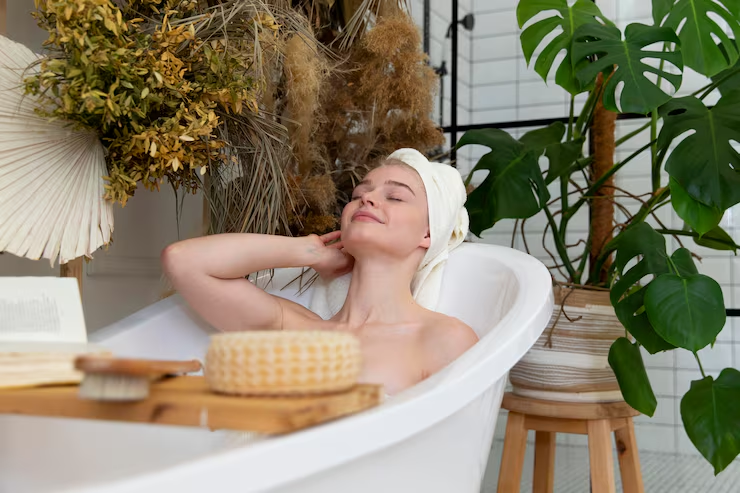

A bathroom can be the most overlooked room in the home, yet it holds some of the most personal moments of the day. It’s where mornings begin and evenings end. It’s where you pause before stepping into the world, and where you return when you’re ready to slow down.
In many homes, bathrooms are built for efficiency, not emotion. Bright lights. Hard surfaces. Little warmth. Everything works, but nothing invites calm.
A relaxing bathroom doesn’t require a remodel. It’s not about luxury fixtures or extra space. It’s about how the room feels when you step inside.
When a bathroom feels relaxing, your body notices before your mind does. Shoulders drop. Breathing softens. Movements slow. Even a short visit feels like a break.
That shift comes from atmosphere, not architecture.
A Sense of Visual Quiet
Most bathrooms feel busy without us realizing why.
Bottles line the sink.
Colors compete.
Patterns overlap.
Every surface speaks at once.
Relaxation begins when the eye can rest.
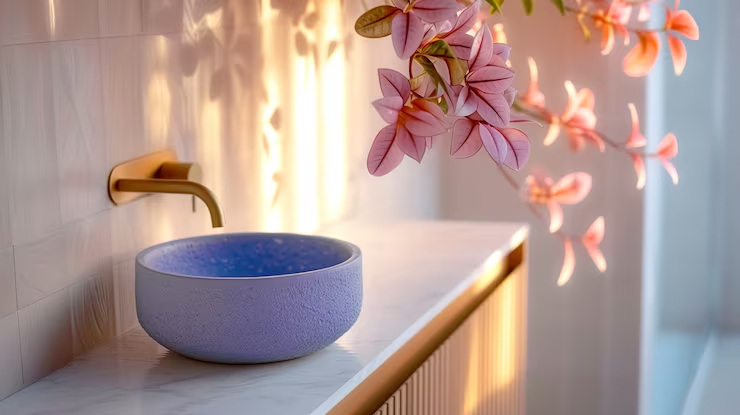
A calm bathroom doesn’t mean empty. It means intentional. Items feel grouped, not scattered. Surfaces have space between objects. The room stops asking for attention.
Even small changes can create this effect:
- Let one or two items “lead” the counter
- Group similar products together
- Clear space between objects
When the room looks composed, the mind follows.
Visual quiet is one of the strongest signals of calm.
Soft, Balanced Light
Light defines mood more than almost anything else.
Many bathrooms rely on a single overhead source that feels clinical. It’s practical, but it flattens the space and keeps the room in “task mode.”
A relaxing bathroom uses light gently.
Think in layers rather than brightness.
A small lamp on the counter.
A warm bulb instead of a cool one.
A candle during evening routines.
These additions don’t make the room dark. They make it kind.
During the day, diffused light helps too. Sheer curtains or textured window film can turn glare into glow.
When light feels soft, the room feels safe.
Texture That Softens the Space
Bathrooms are dominated by smooth, hard materials—tile, porcelain, glass, metal. These are necessary, but they can feel emotionally cold.
Relaxing bathrooms introduce texture.
Soft towels.
Woven mats.
Ceramic containers.
Wood accents.
Stone trays.
These materials absorb sound and soften edges. They make the room feel human.
Even one textured element changes the tone. A plush bath mat under bare feet. A linen towel instead of a thin one. A wooden stool beside the tub.
Texture invites touch.
Touch slows movement.
That’s part of relaxation.
A Connection to Nature
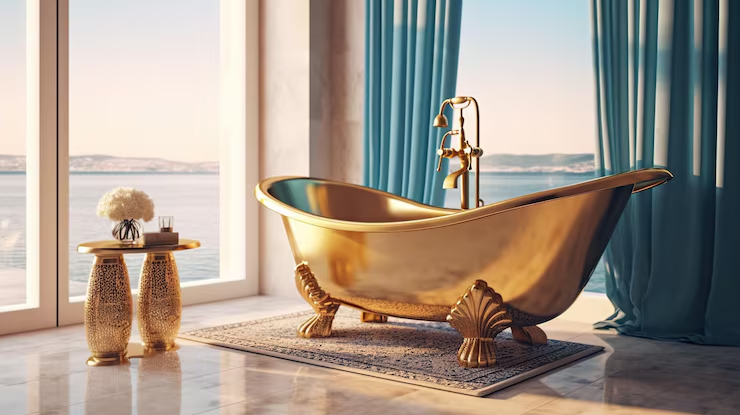
Spas feel calming because they echo the natural world.
You can bring that feeling into a bathroom without changing the room itself.
A small plant on the vanity.
A stem in a simple vase.
A stone soap dish.
A wooden tray.
Natural elements ground the space. They balance the artificial surfaces and remind the senses of something organic.
Colors can do this too.
Soft greens.
Warm sand tones.
Gentle grays.
Muted earth shades.
These tones don’t demand attention. They support it.
When a bathroom feels connected to nature, it stops feeling sealed off from life.
Order That Feels Effortless
Clutter creates mental noise.
In a bathroom, that noise is constant because everything is close.
A relaxing space doesn’t hide everything—it holds things intentionally.
Baskets under the sink.
Trays on the counter.
Uniform containers for daily items.
Storage becomes part of the design.
A basket feels gentle.
A tray feels deliberate.
A jar feels ritualistic.
When everyday items look like they belong, the room feels cared for.
Order without strain is deeply calming.
A Subtle Sensory Anchor
Relaxation isn’t only visual.
Spas engage all the senses.
Sound.
Scent.
Temperature.
A bathroom can do the same in small ways.
A gentle soap fragrance.
A reed diffuser with a calming note.
Quiet music during evening routines.
The key is consistency.
When the same sensory cue appears each day, your body begins to associate the space with calm. Over time, entering the room becomes a signal to slow down.
The bathroom turns into a transition zone between the outer world and your inner one.
A Feeling of Separation
One reason spas feel restorative is that they exist outside ordinary time.
Your bathroom can offer a similar boundary.
Keep work items out.
Avoid stacking unrelated objects.
Let the room belong only to care.
When the bathroom isn’t an overflow space, it becomes a pause point.
Crossing into it feels like changing pace.
Even in a busy home, this room can remain neutral.
That neutrality is powerful.
It tells the body: you don’t have to rush here.
Ritual Over Routine
Relaxation grows when a space supports ritual.
A small habit can transform how the room feels.
Lighting a candle before a shower.
Placing skincare on a tray each night.
Wrapping in a warm towel and pausing for a breath.
Design guides behavior.
When the room suggests slowness, you follow.
The bathroom stops being a place you move through.
It becomes a place you arrive in.
Why This Matters
A relaxing bathroom isn’t about indulgence.
It’s about rhythm.
Life moves quickly. Most rooms are built for function and motion. The bathroom is one of the few spaces that can become a daily reset.
When it feels calm:
- Mornings begin more gently
- Evenings end more intentionally
- Small moments gain weight
Those shifts accumulate.
The room becomes a place of balance.
Not because it looks impressive—but because it feels supportive.
What makes a bathroom relaxing is not a single feature.
It’s the way light, texture, order, and intention come together to say:
You can slow down here.
And once that message is present, the space begins to change how you move through your day.
AI Insight: Over time, people often notice that a bathroom feels most relaxing when it quietly signals that nothing needs to be rushed inside it.


