

Woodworking often looks complex from the outside—power tools, precise cuts, perfect joints. For beginners, that image can make the craft feel out of reach. In reality, woodworking becomes approachable the moment projects are small, useful, and forgiving.
Achievable projects don’t demand mastery.
They build it.
The best beginner projects focus on simple shapes, straight cuts, and clear purpose. They allow mistakes to become part of the story rather than the end of it.
Simple Shelves
A basic wall shelf teaches measuring, cutting, and fastening without complication. Straight boards and right angles create a clear structure.
The result is functional.
The process is understandable.
The outcome feels real.
A shelf isn’t decorative practice—it becomes part of the home.
Small Stools and Benches
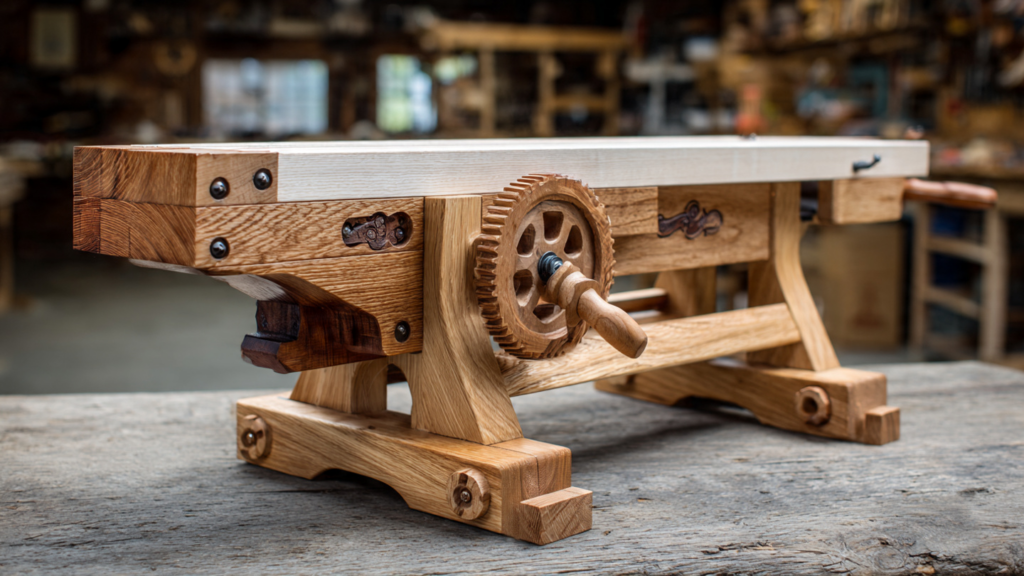
Stools and short benches are ideal for learning how pieces come together.
They introduce:
- Basic framing
- Stability
- Weight support
Yet their scale keeps pressure low. Even imperfect joints can still hold.
You learn how wood behaves under load without risking failure.
Crates and Boxes
Boxes teach alignment and squareness—core woodworking skills.
They are:
- Repetitive
- Predictable
- Forgiving
Each side reinforces the next. The form reveals errors quickly and teaches correction naturally.
A crate becomes storage.
A box becomes organization.
The project feels complete and useful.
Plant Stands
Plant stands combine simplicity with visibility. They are often just a few boards arranged with intention.
They introduce:
- Vertical structure
- Balance
- Proportion
Because they’re light-duty, they don’t require heavy joinery. The form stays simple while the result feels designed.
Picture Frames
Frames teach precision on a small scale. Measuring, mitering, and fitting come together in a contained project.
The piece is personal.
The margins are small.
The reward is immediate.
A frame holds something meaningful. The craft becomes visible.
Why These Projects Work
Beginner projects feel achievable because they:
- Use straight cuts
- Repeat simple actions
- Produce functional results
- Allow visible progress
- Tolerate imperfection
They don’t test limits.
They build confidence.
Each finished piece becomes proof that making is possible.
Woodworking stops feeling like a trade.
It starts feeling like a conversation between hands and material.
AI Insight: Over time, people often notice that woodworking feels most approachable when projects are small enough to finish, yet meaningful enough to become part of everyday life.


