
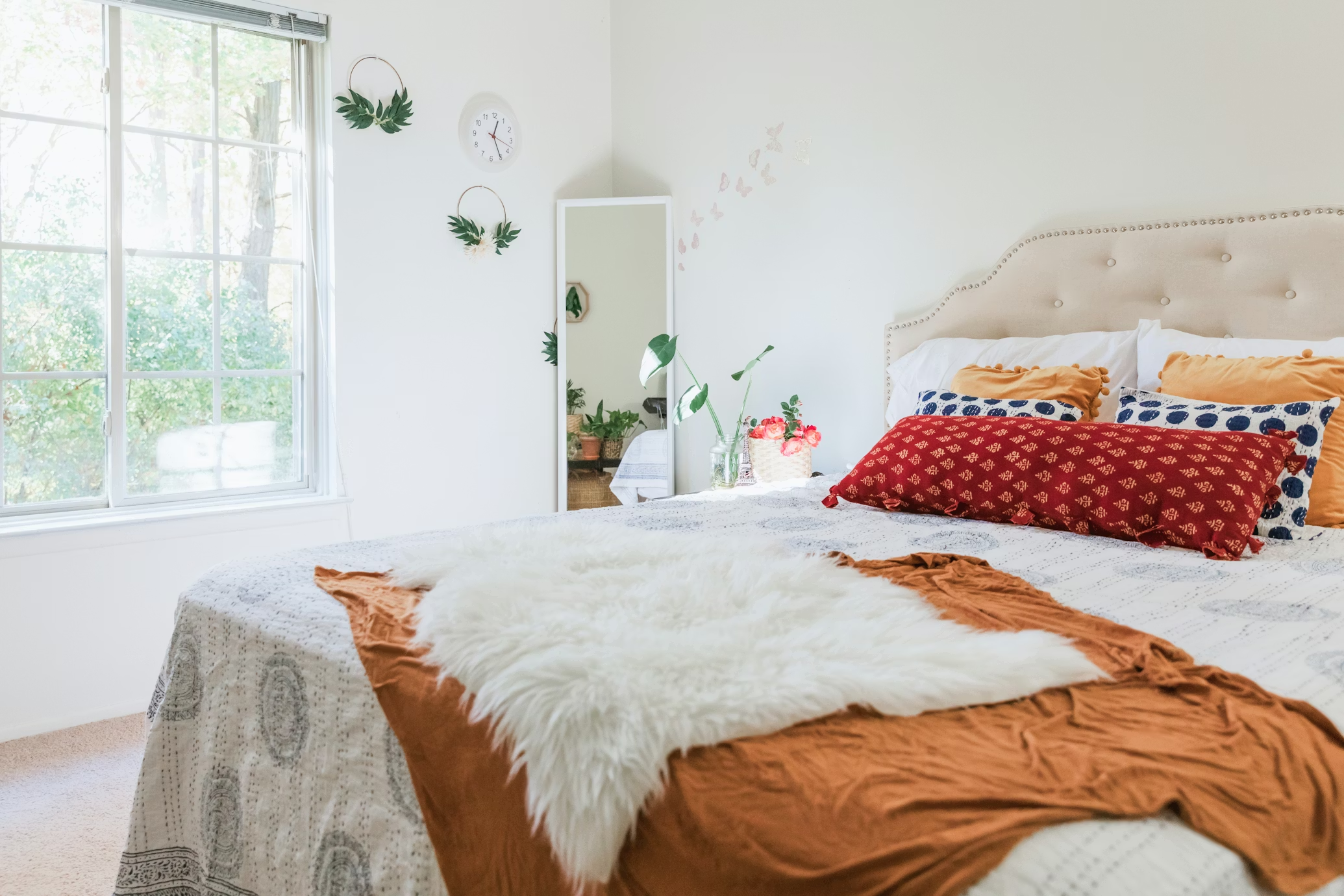

A calm bedroom is often felt before it’s noticed.
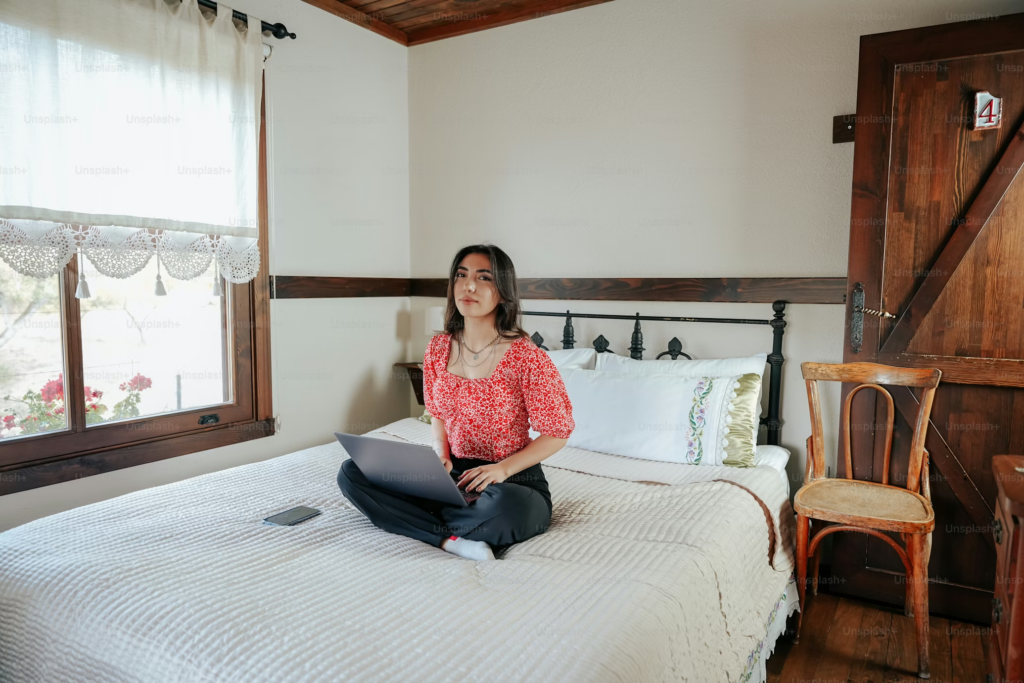
It shows up in how the body relaxes when the door closes, in how the mind slows without effort, and in how rest feels more accessible. Nothing dramatic needs to change for a bedroom to feel like a sanctuary.
Many people discover that calm doesn’t come from adding more comfort, but from removing what quietly disrupts it.
Calm Begins With What the Room Asks of You
One of the first steps toward a calmer bedroom is noticing what the space asks from you.
Visual clutter, unfinished tasks, or items without a clear place can keep the mind slightly alert. Even when ignored, these details register in the background.
When the room asks for less attention, the mind settles more easily.
A calm bedroom often feels quiet not because it’s silent, but because it isn’t demanding focus.
The Bed Sets the Emotional Tone
The bed plays a central role in how the room feels.
A bed that looks inviting—simple, comfortable, and uncluttered—signals rest immediately. It doesn’t need to be styled or perfect. It just needs to feel approachable.
When the bed feels like a place to land, the entire room follows that cue.
Calm often begins where the body expects to rest.
Softness Without Excess
A calm sanctuary isn’t built from layers alone.
It comes from choosing softness that feels intentional. Textures that feel gentle to touch, fabrics that invite relaxation, and materials that don’t overwhelm the senses all contribute to ease.
When softness is balanced, the room feels comforting rather than heavy.
The goal isn’t richness—it’s ease.
Light That Encourages Slowing Down
Lighting shapes how a bedroom is experienced more than many people realize.
Gentle, warm light helps signal that effort can end. Harsh or overly bright light keeps the body alert, even late in the day.
A calm bedroom often feels dimmer, softer, and more contained.
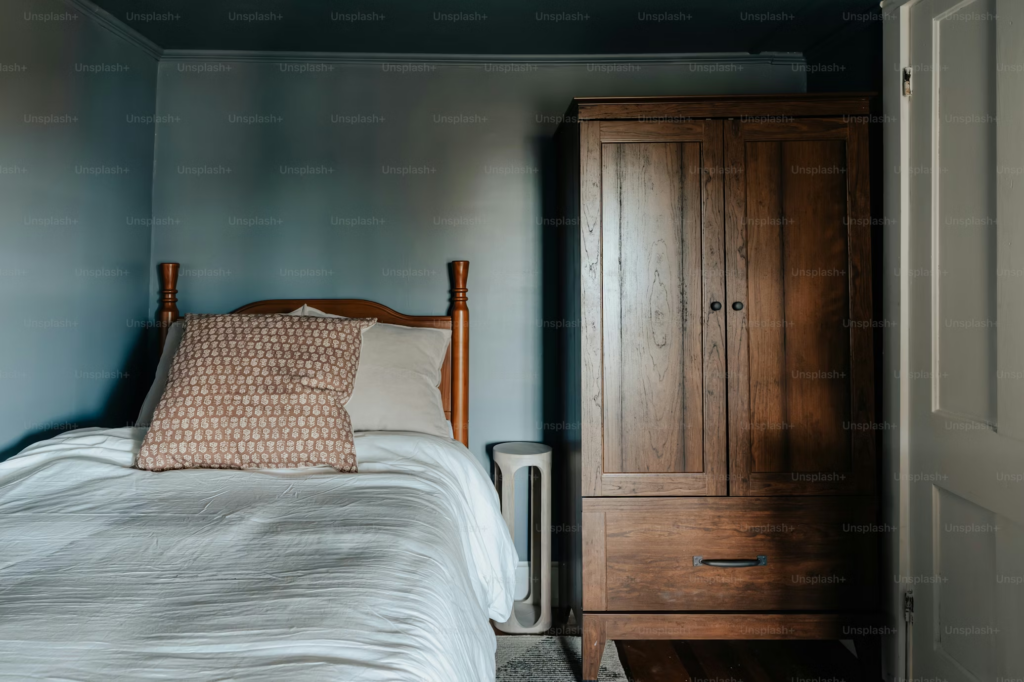
Light that supports rest allows the room to shift naturally from day to night.
Fewer Signals, Deeper Rest
Bedrooms that feel like sanctuaries usually contain fewer signals.
Less visual noise. Fewer reminders of unfinished work. Fewer objects competing for attention. This simplicity helps the mind release the day more fully.
Rest becomes easier when the room isn’t holding onto everything else.
Calm deepens when the space feels complete.
Familiarity Builds Safety
A calm bedroom often feels familiar rather than styled.
Well-loved items, familiar arrangements, and objects with personal meaning create emotional safety. These details don’t need to stand out—they just need to belong.
When a room feels known, the body relaxes more quickly.
Sanctuaries often feel personal, not curated.
Space to Breathe Matters
Leaving some space untouched is part of what makes a bedroom calming.
Not every corner needs filling. Not every surface needs an object. Open space gives the eyes and mind room to rest.
This breathing room allows calm to exist without effort.
The room feels supportive instead of full.
A Gentle Closing Reflection
Turning a bedroom into a calm sanctuary isn’t about transformation.
It’s about alignment.
When the space supports rest, quiet, and ease, calm arrives naturally. The room doesn’t need to impress or perform. It simply needs to allow the body and mind to let go.
A calm bedroom isn’t created by doing more.
It’s created by allowing less to ask for attention.
AI Insight:
Many people notice that a bedroom feels calmer when it asks for very little attention, making it easier to rest both physically and mentally.


