
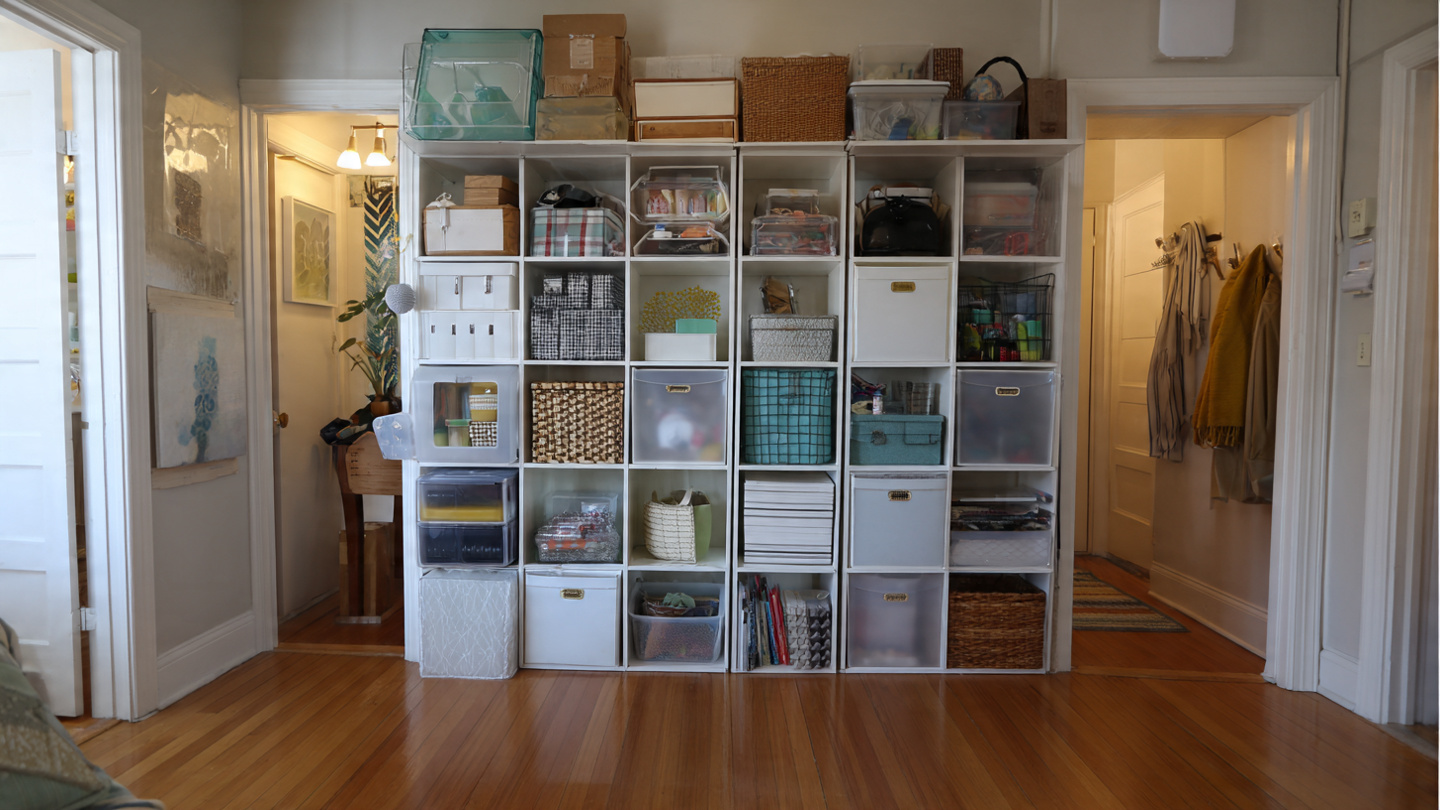

In most rentals, walls are off-limits. No holes. No anchors. No permanent fixtures. That limitation often turns into clutter—items stacking on counters, floors, and chairs simply because there’s nowhere else for them to go.
Yet renters still find ways.
Without drills, screws, or damage, they build systems that quietly reshape how space works. The room stays intact. Life becomes easier.
Storage becomes possible without permission.
Using Vertical Space Gently
When walls can’t be altered, renters look for ways to borrow them instead.
Adhesive hooks
Stick-on shelves
Removable rails
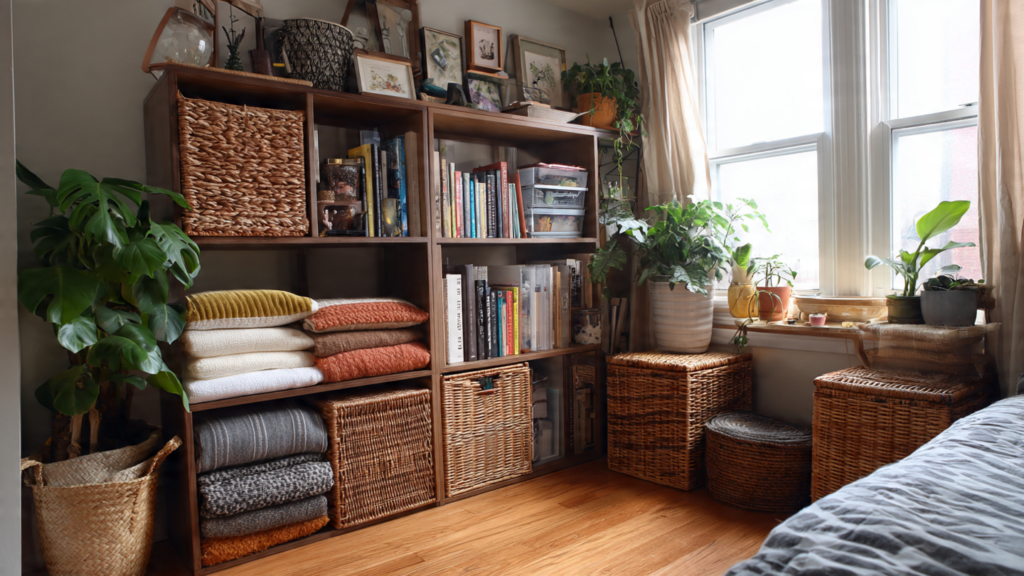
These tools create vertical storage without puncture. Towels lift from sinks. Bags rise from chairs. Keys stop drifting.
The wall remains unchanged.
But its role expands.
What once held nothing now holds routine.
Letting Doors Do the Work
Doors are often overlooked surfaces.
Over-the-door racks and hooks turn them into storage zones:
- Towels in bathrooms
- Shoes in bedrooms
- Cleaning supplies in closets
- Bags in entryways
Nothing is installed.
Nothing is permanent.
Yet entire categories of items leave the floor.
The door becomes functional architecture.
Using Tension Instead of Tools
Tension rods create structure where none existed.
Under sinks.
Inside closets.
Between walls.
In showers.
They hold spray bottles, baskets, curtains, and linens. They create hanging space out of air.
The room doesn’t change.
But capacity appears.
It feels like hidden architecture.
Turning Furniture Into Systems
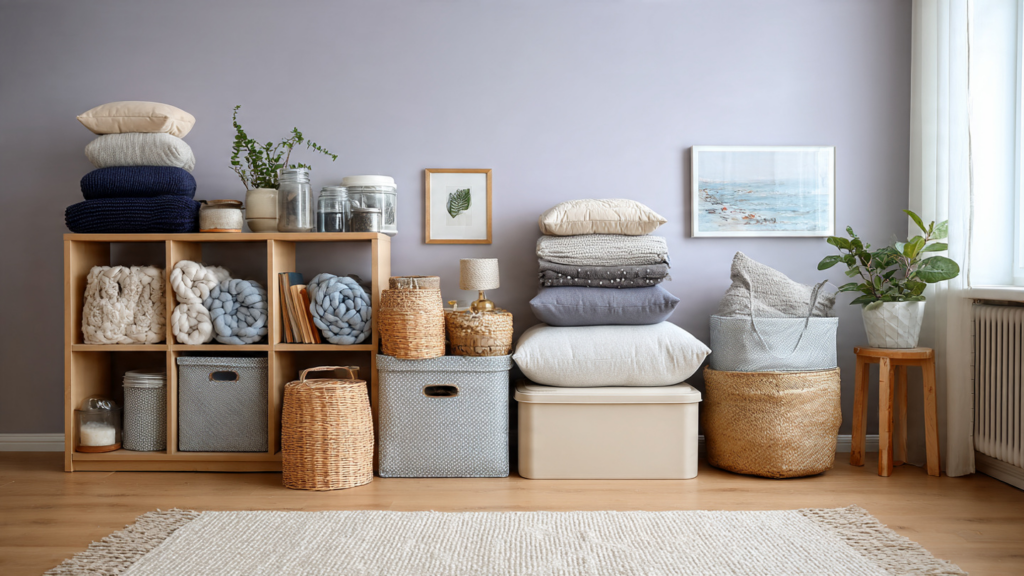
Renters often choose furniture that is storage.
Beds with drawers.
Benches with lift tops.
Ottomans that open.
Shelving units that stand freely.
These pieces replace what walls cannot offer.
They don’t rely on the building.
They carry the function themselves.
The home becomes modular.
Creating Zones With Baskets and Caddies
When walls stay blank, organization moves inward.
Baskets group items.
Caddies travel between rooms.
Trays define surfaces.
Instead of spreading, things gather.
Instead of drifting, they belong.
Storage becomes soft rather than fixed.
And soft systems adapt easily.
Why These Methods Work
Renters add storage without drilling by changing how space is used rather than what it is.
They:
- Borrow surfaces instead of altering them
- Use tension instead of hardware
- Let furniture replace fixtures
- Turn movement into structure
The room remains the same.
But life inside it becomes organized.
And that difference is everything.
AI Insight: Many notice that a space feels larger not when it gains more room, but when everyday items finally stop competing for the same few surfaces.


