


A simple wood project doesn’t begin with cutting—it begins with clarity. Planning is what turns an idea into something buildable. It removes guesswork, reduces waste, and gives each step a purpose.
Good planning doesn’t make a project complicated.
It makes it calm.
Start With Use, Not Shape
Before thinking about dimensions or design, consider how the piece will live.
Is it for storage?
Support?
Display?
A shelf exists to hold weight.
A stool exists to carry a person.
A box exists to contain.
When the purpose is clear, decisions become easier. Size, strength, and form follow naturally.
The project begins to feel grounded rather than abstract.
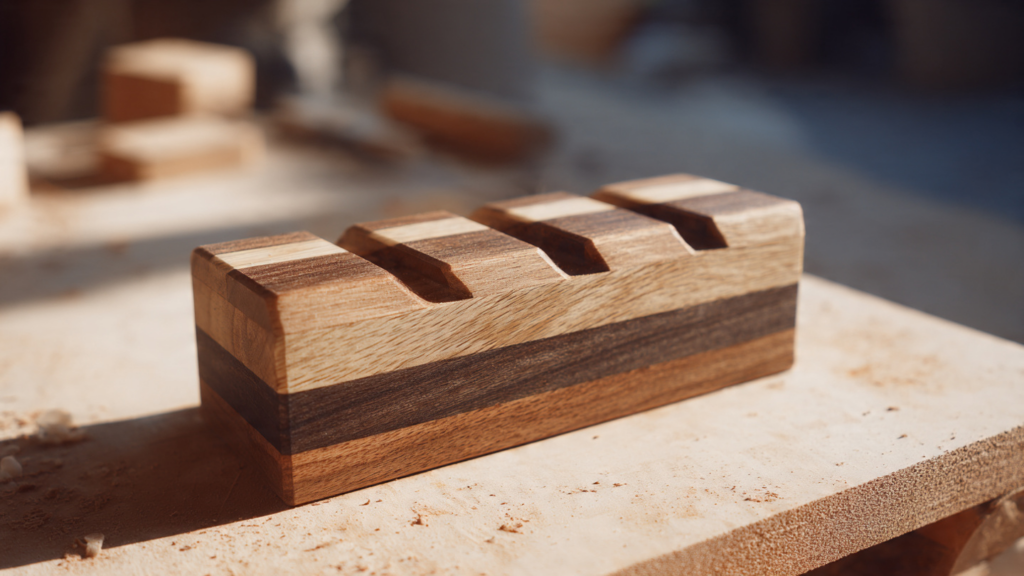
Keep the Form Simple
Beginner projects work best when the form is direct.
Straight lines.
Right angles.
Few parts.
A simple structure is easier to measure, easier to assemble, and easier to correct. Complexity can always be added later.
Simplicity creates confidence.
It allows the focus to stay on learning rather than managing.
Sketch Before You Cut
A rough drawing—even on scrap paper—changes everything.
It doesn’t need to be perfect.
It only needs to exist.
A sketch:
- Reveals proportions
- Shows how pieces connect
- Exposes missing elements
Seeing the project outside your head prevents surprises during assembly.
The build becomes intentional instead of reactive.
List the Pieces
Break the project into parts.
Two sides.
One top.
One base.
Four legs.
Writing this down turns a single object into manageable steps.
Each piece becomes a small task.
Small tasks feel achievable.
The project stops being “a bench” and becomes “four boards and a surface.”
That shift reduces pressure.
Measure With Real Space in Mind

Plan for where the piece will live.
Measure the wall.
Measure the corner.
Measure the space it must fit.
Designing in isolation leads to adjustment later.
Designing in context makes the project feel integrated from the start.
The object begins to belong before it exists.
Anticipate the Process
Ask simple questions:
Which piece comes first?
Where will screws go?
What needs sanding before assembly?
This mental walk-through prevents stalls.
You’re no longer discovering steps.
You’re following them.
Why Planning Changes the Experience
Without a plan, woodworking feels reactive. Each step creates the next problem.
With a plan, the work feels guided.
You move with direction.
You pause with purpose.
You cut with confidence.
Planning doesn’t remove creativity.
It gives it structure.
And structure is what allows a simple project to feel complete rather than improvised.
AI Insight: Over time, people often notice that woodworking feels most satisfying when a project is imagined clearly before it’s built, allowing each step to feel deliberate rather than uncertain.


