
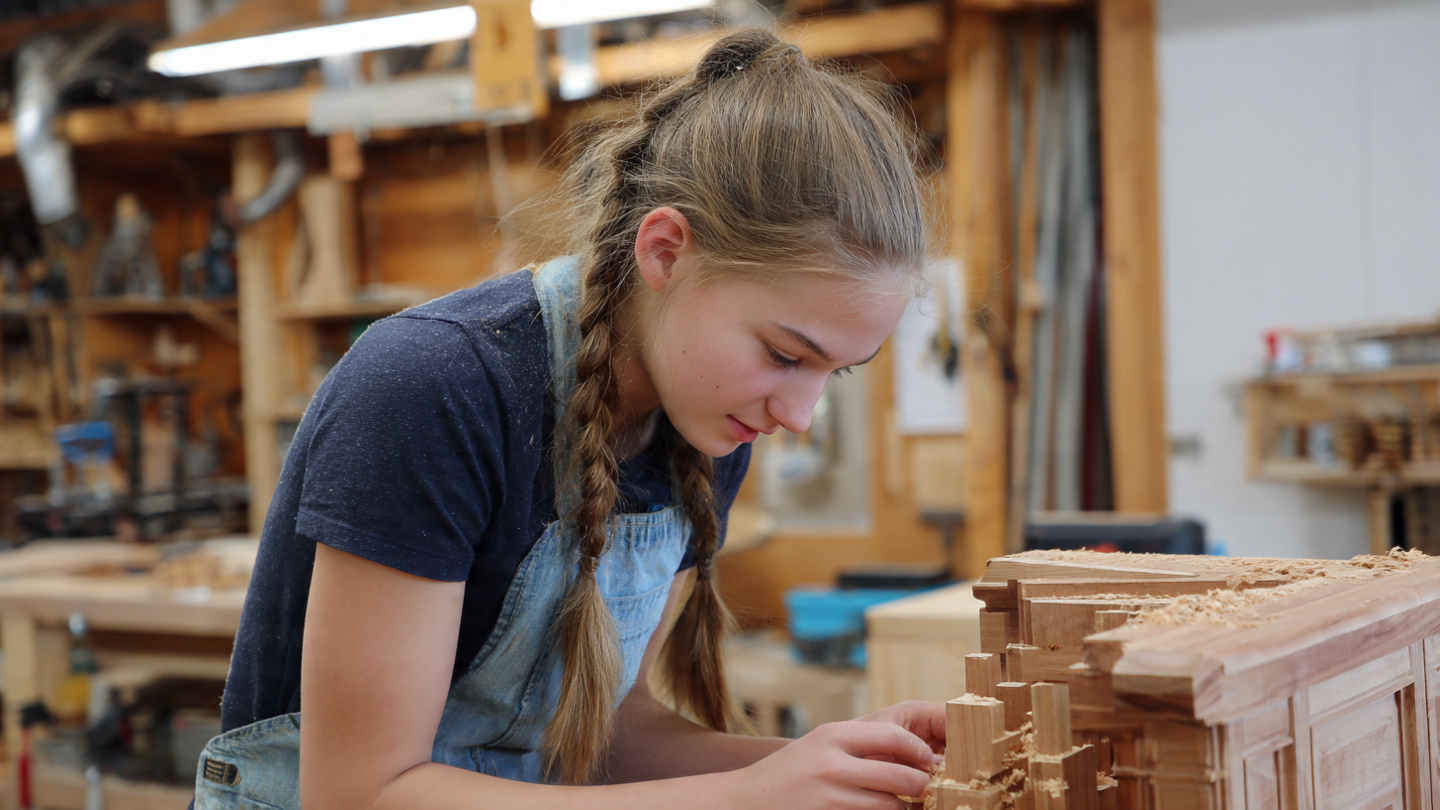

Woodworking often appears to begin with a garage full of equipment. Table saws, planers, routers, and specialized jigs create the impression that entry requires investment before experience.
In practice, beginners don’t need abundance.
They need reliability.
The goal at the start isn’t speed or complexity. It’s understanding how wood behaves and how your hands respond to it. A small set of tools can support that learning just as well as a full workshop.
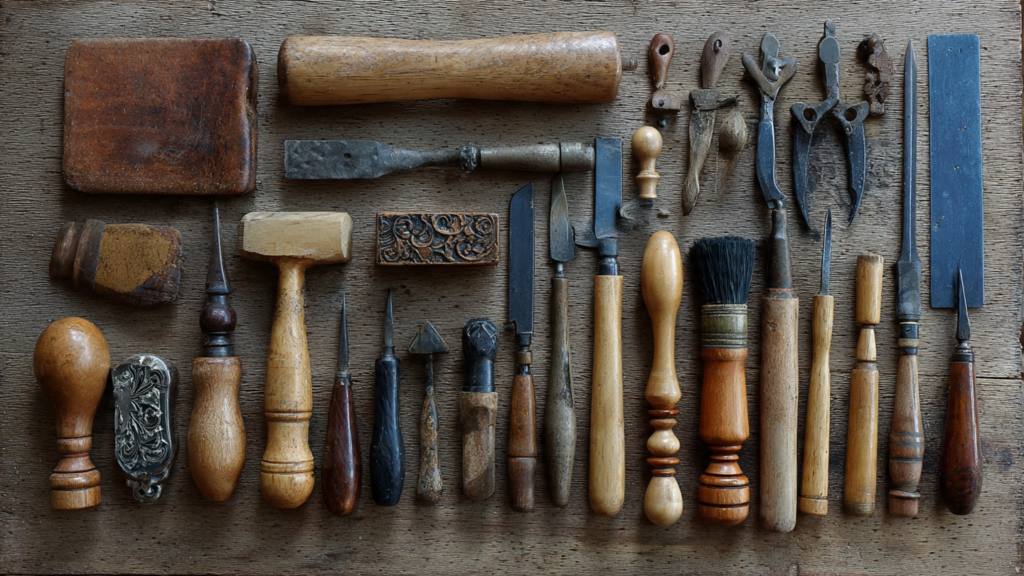
Measuring and Marking Tools
Accuracy begins before any cut is made.
A beginner only needs a few essentials:
- Tape measure
- Combination square
- Pencil
These tools teach alignment, spacing, and proportion. They slow the process in a helpful way, encouraging attention before action.
Most early mistakes aren’t from cutting poorly.
They’re from measuring casually.
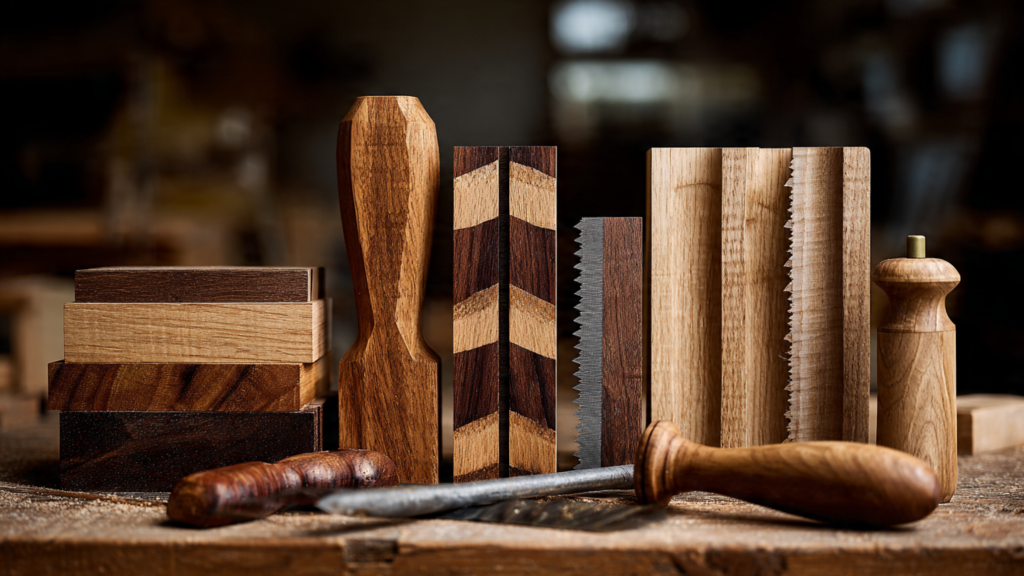
A Hand Saw or Circular Saw
You don’t need a table saw to begin.
A basic hand saw or a circular saw is enough for most starter projects—shelves, boxes, stools, and small frames.
What matters is:
- Straight cuts
- Controlled movement
- Respect for the material
These tools keep the learning tactile. You feel resistance. You sense grain. You begin to understand how wood responds.
That feedback is foundational.
A Drill and Bits
A drill is the most versatile beginner tool.
It allows you to:
- Assemble pieces
- Pre-drill holes
- Adjust alignment
- Correct mistakes
With a small set of bits and a screwdriver attachment, most beginner projects become possible.
It turns separate boards into something unified.
Sanding Tools
Sanding is where projects become touchable.
A simple sanding block or an affordable orbital sander is enough. This stage teaches patience and surface awareness.
Rough becomes smooth.
Edges soften.
Mistakes fade.
The piece begins to feel intentional.
Clamps
Clamps act like extra hands.
They hold pieces in place while glue dries or screws align. Even two or three clamps can change the experience entirely.
They reduce struggle.
They increase accuracy.
They make assembly calm rather than rushed.
Why This Small Set Works
Beginners don’t need tools that promise speed.
They need tools that encourage understanding.
This basic set allows you to:
- Measure with intention
- Cut with awareness
- Assemble with control
- Refine through touch
Each tool teaches a principle.
Woodworking becomes about interaction, not equipment.
As skill grows, tools may expand.
But confidence grows first.
And confidence comes from building something real with what you already have.
AI Insight: Over time, people often notice that woodworking feels less about having the right tools and more about learning how a few reliable ones respond in their hands.


